


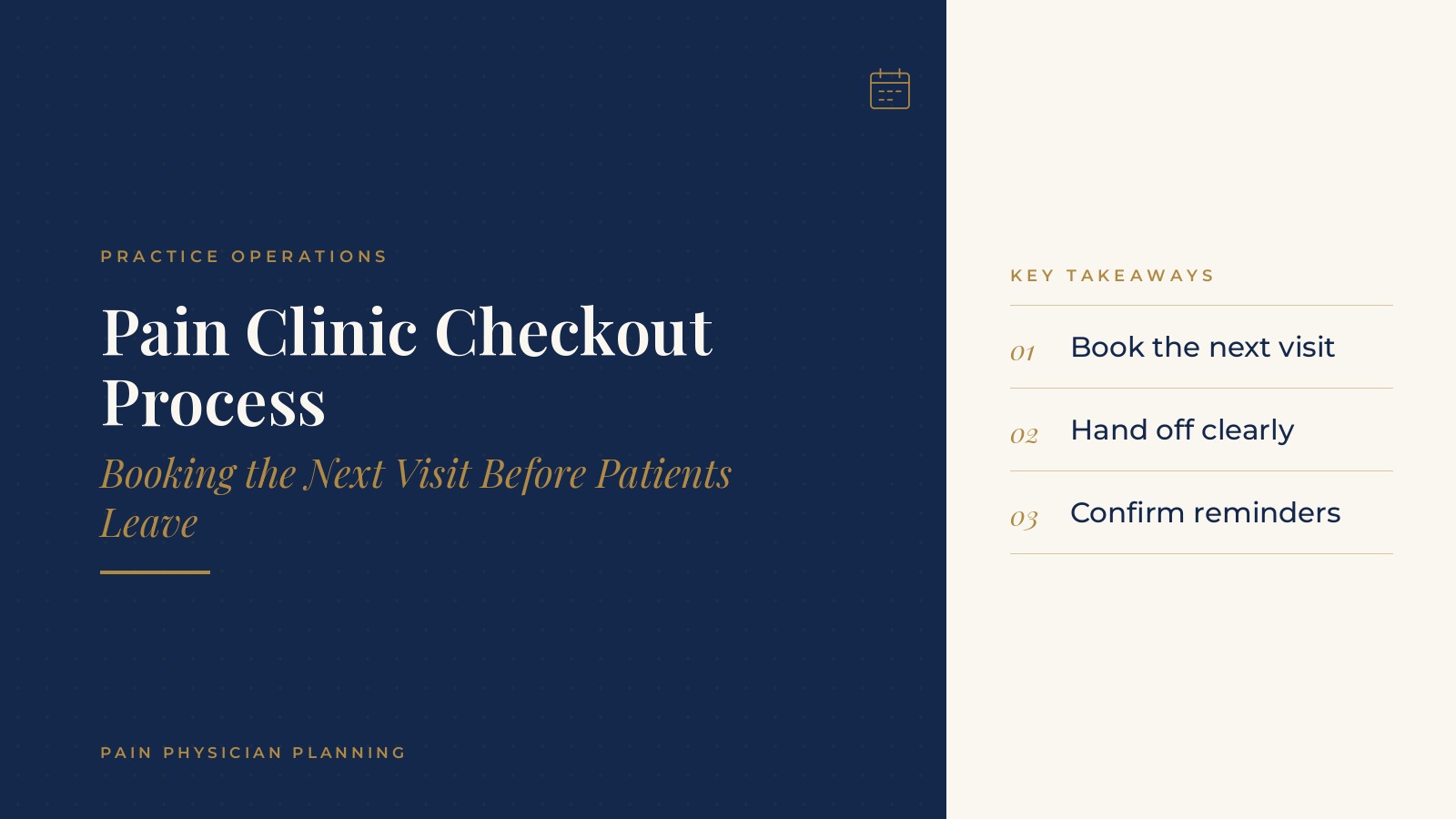
Pain Clinic Checkout Process | Booking the Next Visit Before Patients Leave
A pain clinic checkout process is the short set of steps at the front desk after a visit ends: confirming the plan from the care team, booking the next visit, sharing any printed instructions and setting reminder preferences before the patient walks out.
In short, a smooth pain clinic checkout process usually depends on a clear handoff from the exam room, a schedule that has follow-up time open, a short script for the desk, reminder preferences confirmed on the spot and a daily look at visits that left without a next appointment.
This guide from Pain Physician Planning covers why checkout matters, the handoff from the care team, booking follow-ups and procedure visits, desk layout, reminders, daily review and the questions clinics often discuss with a practice operations professional.
Key takeaways
- Checkout is the last step of the visit, not an afterthought.
- A clear handoff from the care team starts every checkout.
- Hold open follow-up time so next visits can be booked on the spot.
- Confirm reminder preferences before the patient leaves.
- Review each day's visits that left without a next appointment.
Why the pain clinic checkout process matters
Continuity of care starts at the desk
Many pain treatment plans involve a series of visits. Booking the next one before the patient leaves keeps the plan moving and saves a phone call later.
A calmer end to the visit
A predictable checkout routine means patients know what happens next and leave with a date, a time and any written instructions in hand.
Fewer gaps in the schedule
Visits booked at the desk fill the calendar weeks ahead, which gives the clinic a steadier view of upcoming demand.
The handoff from the care team
A clear visit plan
The care team usually marks the follow-up interval and visit type in the practice management system or on a routing slip, so the desk does not need to guess.
One place to look
When every exam room uses the same field or form for the next step, front desk staff can read the plan at a glance during busy hours.
Questions go back to the team
If the plan is unclear, the desk checks with the care team before booking rather than choosing a visit type on its own.
The pain clinic front desk guide covers the wider set of desk roles that checkout fits into.
Pain Physician Planning can introduce you to independent practice operations professionals who work with pain management practices on checkout routines, follow-up scheduling and front desk workflow. To request an introduction, contact us or call or text (972) 616-4581. You can also read about pain management practice operations.
Booking follow-ups and procedure visits
Keep follow-up slots open
Clinics often reserve blocks in each physician's template for returning patients so the desk is not forced to book weeks out for a routine check-in.
Procedure scheduling steps
Procedure visits may need records or preparation steps reviewed before a date is final. Many desks book a tentative date and flag it for the scheduling coordinator to confirm.
Offer two choices
Offering two specific times, such as Tuesday morning or Thursday afternoon, usually moves faster than asking an open question about what works.
The pain clinic scheduling template guide explains how visit lengths and blocks are often set up in the calendar.
Setting up the checkout station
A separate space when possible
Some clinics place checkout away from check-in so arriving patients do not wait behind departing ones and each conversation has a little more room.
Everything within reach
A printer, a stack of common instruction sheets and a second screen for the schedule keep the desk from walking away mid-conversation.
Seating and accessibility
A chair at the counter and a lower section of the desk help patients who are uncomfortable standing after a procedure or a long visit.
A quieter conversation
A small partition or a few steps of distance from the waiting area keeps scheduling details between the patient and the desk, and lets both speak at a normal volume.
Reminders and contact preferences
Confirm how the patient wants reminders
Checkout is a natural moment to confirm whether the patient prefers text, phone or email reminders and to verify the number on file.
Reminder timing
Many clinics send a reminder a few days ahead and another the day before, with an easy way to confirm or ask for a new time.
Written next steps
A short printed card with the date, time, office address and phone number helps patients who prefer paper over messages.
The pain clinic no-shows guide looks at reminder habits that help booked visits turn into kept visits.
A short daily checkout review
Visits without a next appointment
At the end of the day, a quick report of patients whose plan called for a follow-up but who left without one gives the team a short callback list.
Pending procedure dates
Tentative procedure dates waiting on paperwork are reviewed so none sit unconfirmed for long.
Notes for the next huddle
Any recurring checkout snags, such as unclear routing slips or a full template, are noted for the next team huddle.
A simple weekly trend
Some clinics also track, once a week, how many visits left with a next appointment booked. Watching that count over several weeks shows whether changes at the desk are working.
Questions to raise with a practice operations professional
Workflow questions
Clinics often ask how to set up the handoff from the exam room, where checkout should sit in the office and how to staff the desk during peak hours.
Scheduling questions
Other common topics include how many follow-up slots to hold open, how to manage tentative procedure dates and how to handle patients who prefer to call later.
Review questions
A practice operations professional can help a clinic choose which daily reports to run, who works the callback list and how to track whether checkout routines are improving.
Frequently asked questions
What is a pain clinic checkout process?
It is the set of front desk steps after a visit ends, including confirming the care team's plan, booking the next visit, sharing instructions and setting reminder preferences.
Why book the next visit at checkout?
Booking before the patient leaves keeps a treatment plan moving, saves a later phone call and fills the schedule further ahead.
How does the front desk know what to book?
Most clinics have the care team record the follow-up interval and visit type in one standard field or form that the desk reads at checkout.
What if a procedure date cannot be confirmed at checkout?
Many desks book a tentative date and flag it for the scheduling coordinator, who confirms it once any needed paperwork is complete.
How do clinics catch patients who left without a follow-up?
A short end of day report lists visits that called for a follow-up but have no appointment booked, giving the team a callback list.
Request an introduction
Pain Physician Planning can introduce you to independent practice operations professionals who work with pain management practices on checkout routines, next visit scheduling and front desk handoffs. Learn more about pain management practice operations, then take the short Pain Physician Planning Business survey and request an introduction. You can also call or text (972) 616-4581, or contact us. The form goes to [email protected].



