


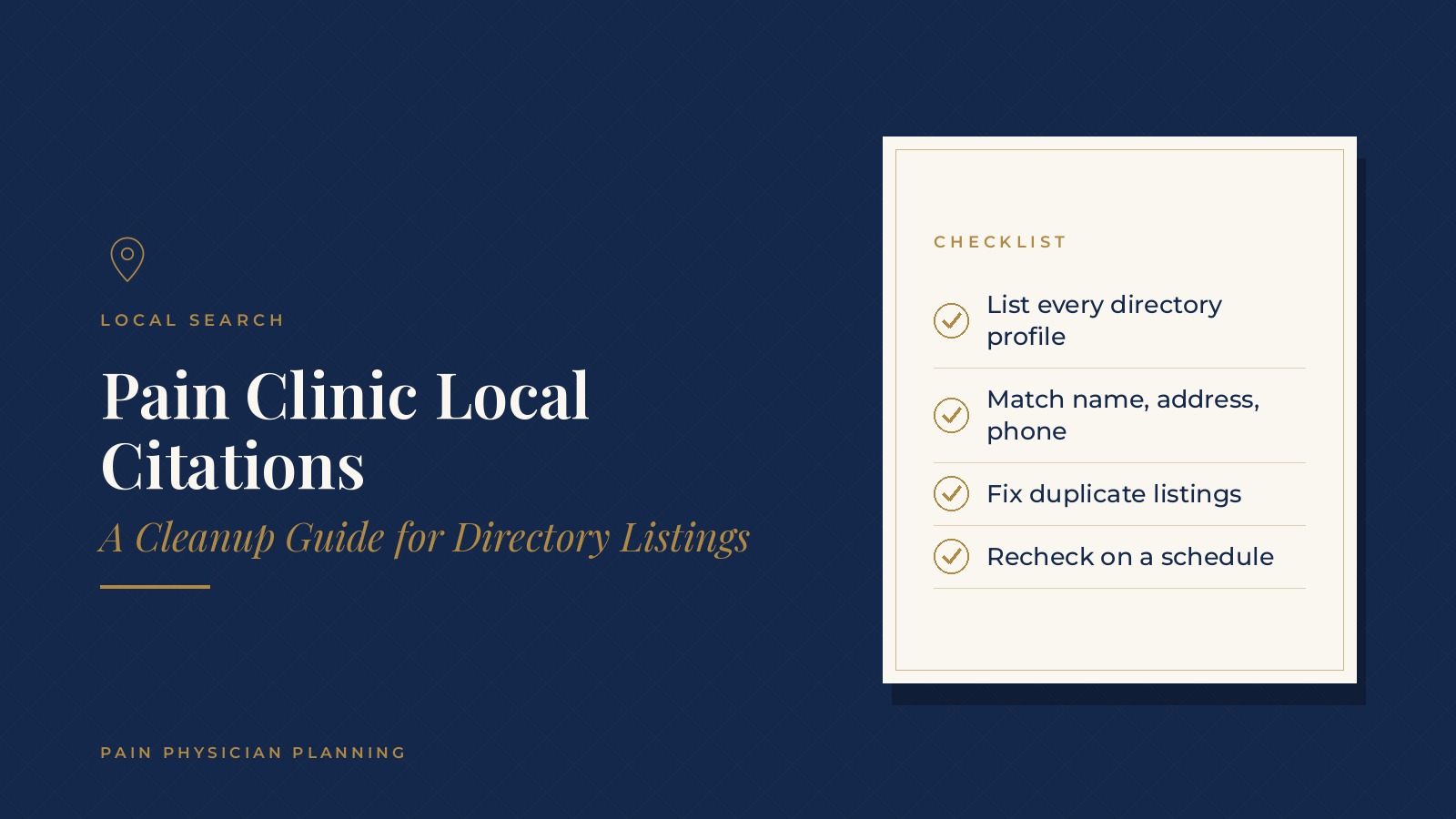
Pain Clinic Local Citations | A Cleanup Guide for Directory Listings
Pain clinic local citations are the online mentions of a clinic's name, address and phone number on directories, map apps, health listing sites and local business pages. Search engines compare these mentions with the clinic's website and map profile, so mismatched or outdated details can make a clinic harder to find in local results.
In short, pain clinic local citations tend to work best when a clinic keeps one master record of its details, finds every existing listing, corrects mismatches and duplicates, claims the profiles that matter most and checks them again on a regular schedule.
This resource from Pain Physician Planning explains what citations are, why consistent details matter, how listings drift out of date, how a cleanup usually runs and the questions practices often bring to a marketing professional.
Key takeaways
- Keep one master record of clinic details.
- Find every listing before changing any.
- Fix mismatches and remove duplicates.
- Claim the profiles patients use most.
- Recheck listings on a set schedule.
What pain clinic local citations are
Mentions of the clinic's core details
A citation is any place online that lists the clinic's name, address and phone number together. Many listings also include hours, a website link, services and the physicians who practice there.
Structured and unstructured mentions
Structured citations live on directories and listing sites with fixed fields. Unstructured mentions show up in local news pieces, community calendars and association pages, where the details appear inside regular text.
Where patients run into them
People looking for pain care often see these listings in map apps, voice assistants, car navigation systems and health directories, sometimes before they ever reach the clinic website.
Why consistent details matter for local search
Search engines look for agreement
When the same name, address and phone number appear across many trusted sources, search engines gain confidence that the details are correct. Conflicting versions can blur that picture.
Patients act on what they see
A wrong phone number or an old suite number can send a patient to voicemail or the wrong building. Accurate listings cut down on missed calls and confused arrivals.
Map results and the clinic profile
Citations support the clinic's Google Business Profile, which often drives map results. The pain clinic Google Business Profile guide covers that profile in more depth.
Pain Physician Planning can introduce you to independent local SEO and digital marketing professionals who work with pain management practices on local citations, directory listings and map visibility. To request an introduction, contact us or call or text (972) 616-4581. You can also read about SEO for pain clinics.
How listings drift out of date
Moves, new suites and new numbers
A relocation, a suite change or a new main line can leave dozens of older listings behind. Some directories copy data from each other, so one outdated record can spread.
Name variations
Small differences add up, such as an abbreviation in one place and the full name in another, or a former clinic name that never got replaced.
Duplicate profiles
Duplicates often appear when a listing was created by a former staff member, a past vendor or the directory itself. They split reviews and can show patients the wrong details.
Physician listings
Individual physician profiles on health directories can list an old practice location long after a physician joins the clinic. The pain clinic physician bio pages guide covers keeping physician details consistent on the website too.
Building a master record of clinic details
One reference document
Many clinics start with a single document that shows the exact clinic name, street address, suite format, main phone number, website address, hours and the categories that describe the clinic.
Matching the website
The details on the master record usually match the footer and contact page of the clinic website word for word, so every listing points back to one consistent source.
Choosing categories with care
The primary category on map platforms, such as pain management physician or pain control clinic, shapes which searches a listing can appear in. Many clinics pick one primary category and a few closely related secondary ones.
One record per location
A clinic with more than one office keeps a separate record for each location, with its own address, phone number and hours.
A pain clinic local citations cleanup, step by step
Find what already exists
A cleanup usually starts with a list of every directory, map app and health listing that mentions the clinic, along with the details each one shows.
Prioritize the main profiles
Map platforms, the largest general directories and the main health listing sites usually come first, since they reach the most patients and feed data to smaller sites.
Correct, claim and merge
Each listing is claimed where possible, corrected to match the master record and merged or removed when it duplicates another profile. Some directories take weeks to process changes.
Keep a log
A simple log of each listing, its login owner and the date it was last checked keeps the work from being repeated later. A marketing professional can explain how pain clinic SEO work usually includes this kind of listing upkeep.
Checking the results
After the main corrections post, a second pass through the same list confirms which changes went live and which directories still show old details, so follow-up work stays focused.
Keeping citations accurate over time
Scheduled checks
Many clinics review their main listings every few months and after any change to hours, phone numbers, physicians or locations.
Watching for suggested edits
Some platforms accept edits from the public. Checking the main profiles for suggested changes helps keep details from being altered without the clinic noticing.
Connecting citations to other local work
Listings, reviews and local pages work together. The back pain doctor near me SEO guide explains how these pieces support local searches for pain care.
Questions practices bring to a marketing professional
Common planning questions
- Which directories and health listing sites matter most for the clinic's area?
- How are duplicate listings found and handled?
- Who holds the logins for each listing?
- How often will listings be checked, and what will the clinic see in reports?
Keeping listings in the clinic's name
Many practices keep listing logins under a practice email address, with outside professionals added as users, so the profiles stay with the clinic over time.
Frequently asked questions
What are pain clinic local citations?
They are online mentions of a clinic's name, address and phone number on directories, map apps, health listing sites and local pages.
Why do citation details need to match?
Matching details help search engines trust the information and help patients reach the right phone number and building.
What causes incorrect listings?
Moves, suite changes, new phone numbers, name variations and duplicate profiles created by others are common causes.
How long does a citation cleanup take?
Many changes post within days, but some directories take several weeks to process corrections or merge duplicates.
How often should listings be reviewed?
Many clinics review their main listings every few months and again after any change to hours, phones, physicians or locations.
Request an introduction
Pain Physician Planning can introduce you to independent local SEO and digital marketing professionals who work with pain management practices on local citations, listing cleanup and local search planning. Learn more about SEO for pain clinics, then take the short Pain Physician Planning Marketing & SEO survey and request an introduction. You can also call or text (972) 616-4581, or contact us. The form goes to [email protected].



