
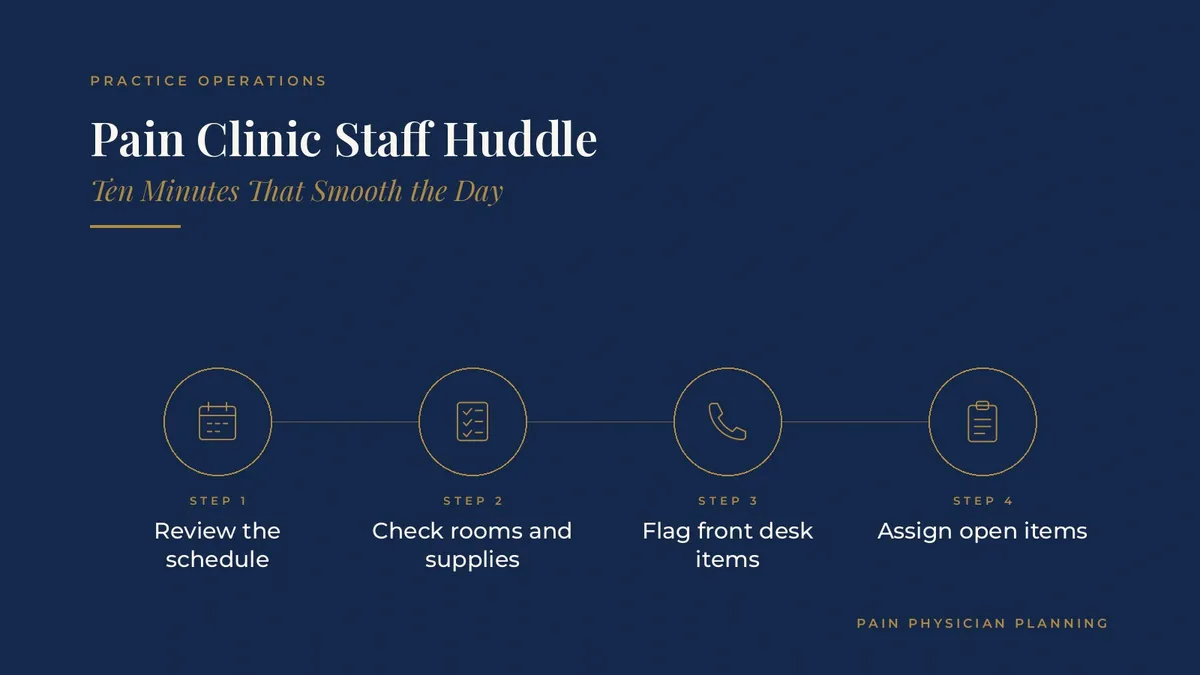
Pain Clinic Staff Huddle: Ten Minutes That Smooth the Day
A pain clinic staff huddle is a short, standing meeting at the start of the clinic day where physicians, clinical staff and front desk team members review the schedule, flag needs and agree on who is covering what. Done well, it takes about ten minutes and sets a shared tone for the day. In short, a pain clinic staff huddle works best when it is brief, happens at the same time and place each day, follows the same agenda and ends with named owners for any open items. Standing for the meeting and keeping a written checklist help it stay short. This resource from Pain Physician Planning explains how pain clinics commonly structure a daily huddle, what the agenda can include, how roles are assigned and how teams keep the habit going.
Key takeaways
- Keep the huddle to about ten minutes.
- Use the same agenda every day.
- Review the schedule and room needs.
- Name an owner for each open item.
- Check the format again every quarter.
Why a pain clinic staff huddle helps
Everyone sees the same day
Pain clinics often combine follow-up visits, procedure days and new patient consultations. A short huddle lets the front desk, medical assistants, nurses and physicians see the same schedule at the same time, which reduces surprises later in the morning.
Small problems surface early
A missing form, a room that needs restocking or a schedule change is easy to fix at 7:50 and harder to fix at 10:30. A predictable moment to raise issues helps staff speak up without interrupting patient care.
Communication stays consistent
Instead of passing messages person to person, the team hears them once. The guide to the pain clinic front desk describes how front desk workflows connect with clinical teams during the day.
A ten minute pain clinic staff huddle format
A sample agenda
Many clinics use a short checklist that moves in the same order each day. A common version looks like this:
- Welcome and any staffing changes, about one minute.
- A look at the day's schedule: visit types, procedure times and new patients, about three minutes.
- Room, equipment and supply needs, about two minutes.
- Front desk items such as forms, paperwork to check and call volume, about two minutes.
- Questions and a closing reminder, about two minutes.
Choose a timekeeper
Rotating a timekeeper each week keeps the meeting on time and gives more team members a role. A visible clock or timer on the wall works well.
Stand up and stay brief
Many teams hold the huddle standing, which keeps it quick. Longer topics move to a separate conversation with only the people involved, so the huddle never turns into a full staff meeting.
Pain Physician Planning can introduce you to independent practice operations professionals who work with pain management practices on daily workflows, scheduling coordination and team communication. To request an introduction, contact us or call or text (972) 616-4581. You can also read about pain management practice operations.
Who does what in the huddle
Physician or clinical lead
One clinician usually shares anything unusual about the day, such as procedure timing or a visiting provider, and answers questions from the team.
Front desk lead
The front desk lead reviews the schedule for gaps and add-ons, mentions anything that needs special attention at check-in and notes expected phone volume. The guide to pain clinic scheduling templates explains how the schedule itself is designed.
Clinical staff
Medical assistants and nurses confirm rooms, supplies and any equipment needed for procedure visits. They also share what they noticed the previous day that might affect today.
A note taker for open items
One person records open items with an owner and a time to follow up. A shared checklist, whiteboard or simple document is enough, and unfinished items are the first topic at the next huddle.
Topics that fit a pain clinic huddle
Schedule and flow topics
Procedure days, new patient blocks and follow-up clusters each place different demands on rooms and staff. A quick look at the day's mix tells everyone where the pressure points are.
Front desk and phone topics
Expected call volume, patients who need extra help at check-in and forms that must be completed before a visit are all practical huddle items. The front desk lead can name them in a sentence or two.
Equipment and supply topics
A short note about equipment that needs attention or supplies that are running low helps the clinical team act before the first procedure of the day.
Recognition and reminders
Many teams close with a short thanks or a reminder about a goal for the week, such as keeping the waiting room moving. A positive close sets a good tone for the day ahead.
Getting started with a pain clinic staff huddle
Pilot for two weeks
Choose a start date, post the agenda at the front desk and run the huddle for two weeks before adjusting. A short trial shows which items matter and which can be dropped.
Share the purpose
Explain to the team why the huddle exists: a calmer, better prepared day for staff and patients. Teams that understand the purpose tend to keep the meeting short and focused.
Capture what works
After the trial, ask each role what they found useful and write the revised agenda on a single page. Keep that page where everyone can see it, and revisit it each quarter.
Keeping the huddle useful over time
Start the same way every day
Consistency matters more than any particular format. Starting at the same time, in the same place, with the same opening line makes the huddle a habit rather than a favor.
Review the format quarterly
Every few months, ask the team what is useful and what could be dropped. A huddle that has grown beyond fifteen minutes often needs a trim. The guide to pain clinic patient intake is a helpful companion when the team wants to refine check-in topics.
Handle absences and busy days
On days when many people are unavailable, a shorter version with only the schedule and room needs still keeps the rhythm. Some clinics send a short written summary to anyone who missed the meeting.
Connect it to broader goals
Over time, notes from huddles show recurring themes: common scheduling gaps, supply issues or phone peaks. These themes can inform staffing, scheduling and workflow planning. The guide to pain clinic no-shows covers one topic that often appears on huddle agendas.
Frequently asked questions
What is a pain clinic staff huddle?
It is a short standing meeting at the start of the clinic day where the team reviews the schedule, room and supply needs, front desk items and who is covering what.
How long should a staff huddle last?
Many clinics aim for about ten minutes, using a fixed agenda and moving longer topics to a separate conversation.
Who should attend the huddle?
Front desk staff, medical assistants, nurses and at least one clinician usually attend, with a lead from each group sharing updates.
What should be on the huddle agenda?
A typical agenda covers staffing, the day's schedule, rooms and supplies, front desk items and open questions, in the same order every day.
How do clinics keep the habit going?
They hold it at the same time and place, rotate a timekeeper, track open items with owners and review the format with the team every quarter.
Request an introduction
Pain Physician Planning can introduce you to independent practice operations professionals who work with pain management practices on daily workflows and team communication. Learn more about pain management practice operations, then take the short Pain Physician Planning Business survey and request an introduction. You can also call or text (972) 616-4581, or contact us. The form goes to [email protected].