


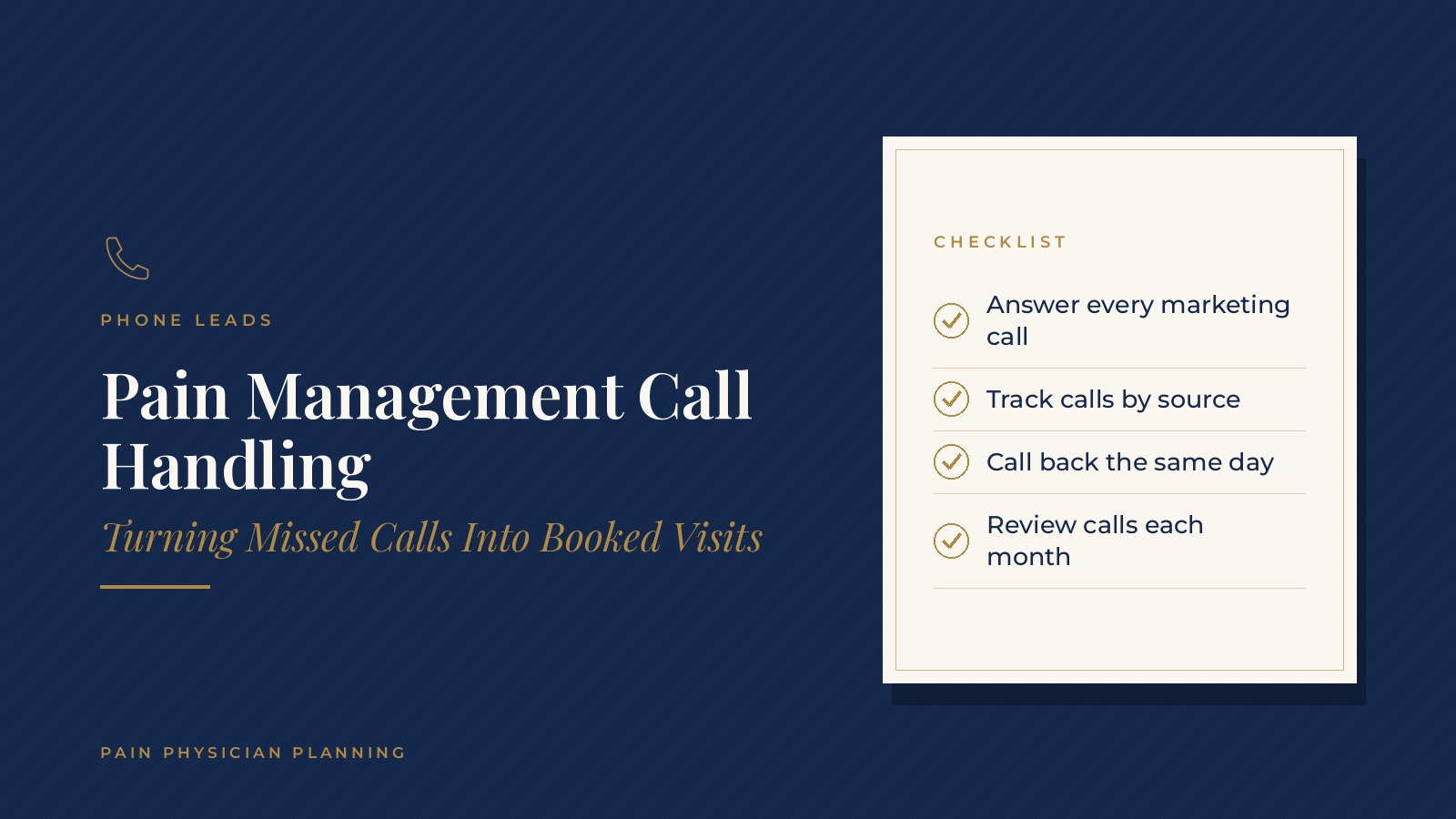
Pain Management Call Handling | Turning Missed Calls Into Booked Visits
Pain management call handling is the way a clinic answers, routes and follows up on the phone calls its marketing produces. Ads, map listings and website pages all lead to the same place for many patients: a phone call to the front desk. How that call is answered often decides whether the marketing turns into a booked visit. In short, pain management call handling works best when marketing calls are answered quickly by trained staff, each call is tracked back to its source, missed calls get a same-day callback, short scripts keep answers consistent and the clinic reviews call data alongside its marketing reports every month. This resource from Pain Physician Planning explains why calls matter to marketing results, how call tracking works, how clinics plan coverage and callbacks and the questions practices often bring to a marketing professional.
Key takeaways
- Treat marketing calls as part of the campaign.
- Track calls back to each ad and listing.
- Return missed calls the same business day.
- Use short scripts for common questions.
- Review call data with marketing reports.
Why pain management call handling shapes marketing results
The phone is still the main path
Many people looking for pain care prefer to call rather than fill out a form. A clinic can run strong ads and rank well on maps, yet still lose new patients if those calls ring through to voicemail or reach a busy line.
Marketing and the front desk share one goal
Ad reports often stop at the click or the call. The visit only happens after a person at the clinic answers and books it, so many practices treat call handling as the last step of every campaign rather than a separate front desk task.
Small gaps add up
A few unanswered calls each day may not feel like much. Over a month, those calls can represent a large share of the people an ad budget was meant to reach, which is why clinics look closely at answer rates.
How call tracking works for a pain clinic
Tracking numbers by source
Call tracking assigns a different phone number to each marketing source, such as Google Ads, the Google Business Profile and the website. When a call comes in, the system records which source it came from.
What the reports show
Typical reports list call volume, answered and missed calls, call length and time of day for each source. That view helps a clinic see which campaigns bring in callers and when those callers tend to reach out.
Keeping the main number consistent
Many practices keep one main number on their listings and use tracking numbers only where they do not confuse patients or map listings. A marketing professional can explain how this is usually set up for pain clinic Google Ads and search listings.
Pain Physician Planning can introduce you to independent digital marketing professionals who work with pain management practices on call tracking, phone handling for ad and website leads and marketing reports. To request an introduction, contact us or call or text (972) 616-4581. You can also read about digital marketing for pain clinics.
Answering marketing calls well
A warm, prompt greeting
Callers in pain may be tired or frustrated. A greeting that names the clinic, offers help and moves quickly to the reason for the call sets a calm tone.
Knowing what the ad promised
Staff who know which services and locations the current ads mention can answer with confidence. A short weekly note from the marketing side about active campaigns helps the front desk stay in step.
Booking on the first call
When the schedule allows, offering an appointment time during the call keeps the momentum going. The pain clinic front desk guide covers how check-in and scheduling routines support this.
Missed calls and callback routines
A same-day callback habit
Many clinics set a goal of returning every missed call within a few hours and always by the end of the business day. A shared list makes it clear who is calling back and when.
Voicemail that invites a callback
A short voicemail greeting with clinic hours and a promise of a prompt return call encourages people to leave a message instead of trying the next clinic on the list.
Text follow-up where appropriate
Some practices send a brief text after a missed call letting the person know the clinic will call back, without asking for any health details by text.
Scripts, staffing and peak hours
Short scripts, not long speeches
Scripts for new patient calls, location questions and directions help staff give the same clear answers. Many clinics keep them to a page and update them when campaigns change.
Planning around call peaks
Call reports often show busy windows, such as Monday mornings and the first hour after lunch. Some clinics schedule extra phone coverage during those windows or route overflow calls to a second line.
The right phone setup
Call queues, ring groups and clear menus all affect how quickly a person reaches someone. The pain clinic phone system guide explains how practices plan lines and routing.
Measuring pain management call handling
Measures many clinics watch
- Share of marketing calls answered live
- Average time to return a missed call
- Calls that turned into booked visits, by source
- Busiest hours and days for calls
Reading the numbers together
Pairing call data with ad and search reports gives a fuller picture than either alone. The guide to pain management marketing metrics covers the wider set of measures practices review.
A monthly review rhythm
Many clinics meet once a month to look at call trends by source and hour, compare them with the marketing calendar and agree on one or two improvements for the next month.
Questions practices bring to a marketing professional
Common planning questions
- Which marketing sources produce the most calls?
- How is call tracking set up without confusing map listings?
- What reports will the clinic see, and how often?
- How do call results feed back into ad and website changes?
Keeping systems in the clinic's name
Many practices keep phone, tracking and ad accounts in the practice's own name, with outside professionals added as users, so the history stays with the clinic.
Frequently asked questions
What is pain management call handling?
It is the way a pain clinic answers, routes, tracks and follows up on phone calls that come from its ads, listings and website.
Why does call handling matter for marketing?
Many patients call before they book, so the result of an ad or listing often depends on whether that call is answered and turned into a visit.
How does call tracking work?
Each marketing source gets its own tracking number, and the system records which source each call came from along with answered and missed calls.
How quickly should missed calls be returned?
Many clinics aim to return missed calls within a few hours and always by the end of the same business day.
Which call measures do clinics review?
Many review the share of calls answered live, callback times, calls that became booked visits by source and the busiest calling hours.
Request an introduction
Pain Physician Planning can introduce you to independent digital marketing professionals who work with pain management practices on call handling, call tracking and new patient growth planning. Learn more about digital marketing for pain clinics, then take the short Pain Physician Planning Marketing & SEO survey and request an introduction. You can also call or text (972) 616-4581, or contact us. The form goes to [email protected].



