


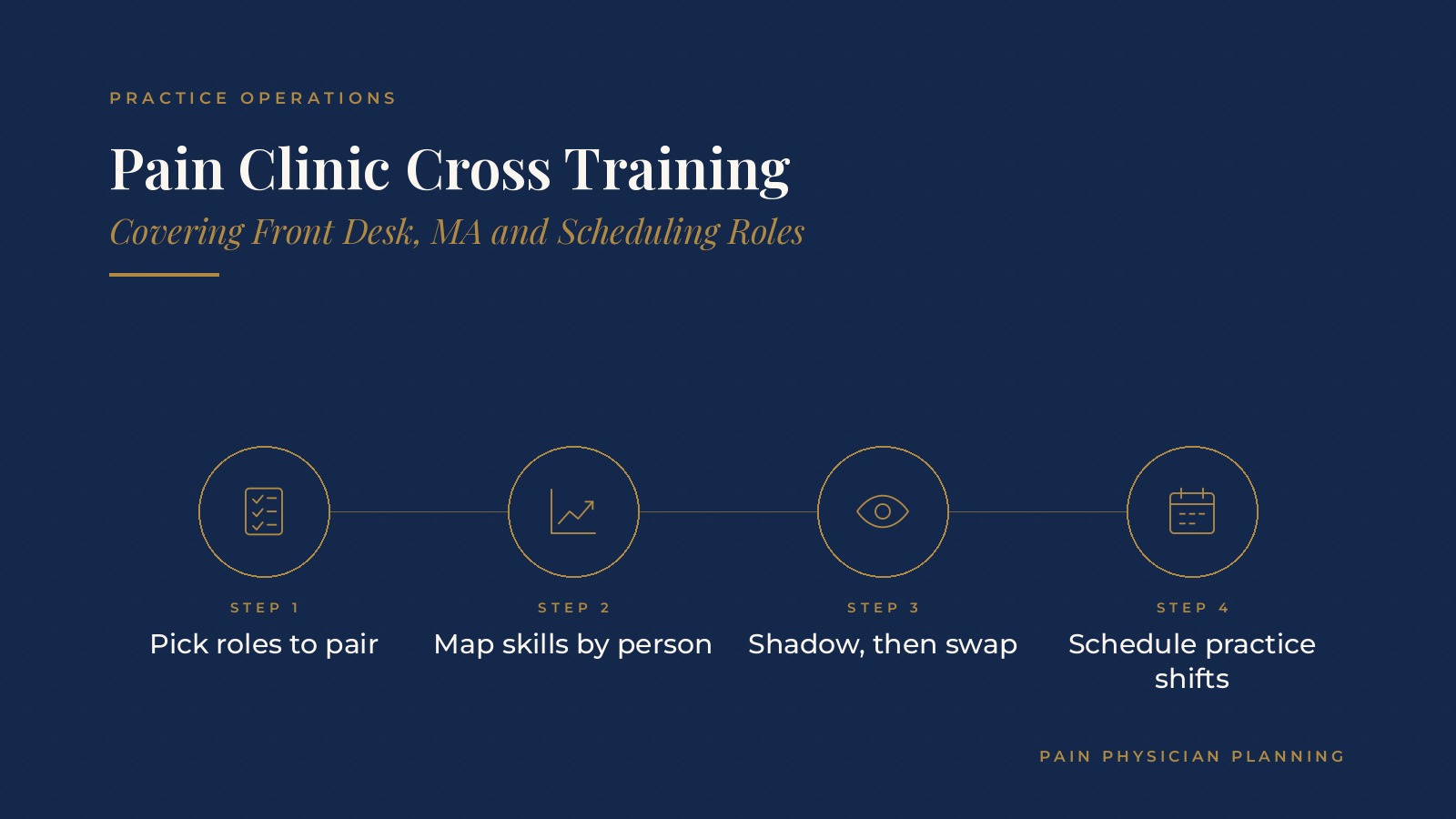
Pain Clinic Cross Training | Covering Front Desk, MA and Scheduling Roles
Pain clinic cross training means teaching team members a second role, such as a front desk coordinator learning scheduling tasks or a medical assistant learning check-in, so the clinic keeps running when someone is out or a station gets busy.
In short, pain clinic cross training tends to work best when the clinic picks which roles to pair, tracks skills in a simple matrix, uses shadow shifts before solo work, keeps written task guides at each station and plans regular practice shifts on the calendar.
This resource from Pain Physician Planning covers why cross training helps, choosing role pairs, building a skills matrix, the shadow and swap method, task guides, scheduling practice time and the questions practices often discuss with a practice operations professional.
Key takeaways
- Choose role pairs that share tasks.
- Track who can cover what in a skills matrix.
- Shadow first, then swap under supervision.
- Keep short task guides at every station.
- Schedule practice shifts so skills stay fresh.
Why pain clinic cross training matters
Absences do not stop the day
Sick days, vacations and open positions happen in every clinic. When two or three people can handle each core task, the schedule stays on track.
Busy stations get relief
Mornings at check-in and afternoons on the phones often peak at different times. Cross trained staff can move to the busiest station as the day changes.
A wider view of the clinic
People who have worked another role understand how their own work affects the next step, which tends to smooth handoffs between the desk, the back office and clinical staff.
Steadier service for patients
People calling or arriving at the clinic notice when a familiar task is handled smoothly even on a short staffed day, which supports a calm first impression.
Choosing which roles to pair
Front desk and scheduling
Check-in, phone scheduling and appointment reminders share the same system and many of the same screens, which makes this a natural pairing.
Medical assistants and rooming support
Medical assistants can often learn each other's room setup and supply routines, and some clinics teach front desk staff a few non-clinical tasks such as preparing visit paperwork.
Keep clinical scope clear
Cross training stays within each person's training and credentials. Clinical tasks are taught only to staff who are qualified to perform them.
The pain clinic front desk guide describes the phone, scheduling and check-in tasks that front desk cross training usually covers.
Pain Physician Planning can introduce you to independent practice operations professionals who work with pain management practices on staffing plans, cross training and role coverage. To request an introduction, contact us or call or text (972) 616-4581. You can also read about pain management practice operations.
Building a simple skills matrix
A grid of people and tasks
A skills matrix lists team members down one side and core tasks across the top. Each cell shows whether the person is learning, able with help or fully able.
Spot single points of failure
Any task with only one fully able person is a gap. Those tasks usually go to the top of the training list.
Keep it current
Updating the matrix after each training block and reviewing it at a monthly huddle keeps it useful instead of forgotten in a folder.
Include the less common tasks
Month end reports, supply orders and system updates are easy to forget because they happen rarely. Listing them in the matrix keeps them from resting with one person.
The shadow and swap method
Shadow shifts
The learner sits with an experienced team member and watches the full task, asking questions along the way.
Supervised swaps
Next, the two trade places. The learner handles the task while the experienced person watches and steps in when needed.
Solo with backup
Once the learner is comfortable, they cover the role on a lighter day with a named person available for questions. After a few of these shifts, the matrix is updated.
A sign-off step
Many clinics close each training block with a short check where the learner completes the task while the trainer confirms each step, then both initial the matrix.
Written task guides at each station
One page per task
Short guides with numbered steps and screenshots of the system make it easier to cover a station that someone does only a few times a month.
Where to keep them
Many clinics keep guides in a shared folder and print the most used ones for a binder at the station.
Who updates them
The person who knows the task best usually owns the guide and reviews it whenever a system or process changes.
Test the guide with a newcomer
Asking someone who has never done the task to follow the guide is a quick way to find missing steps or unclear wording before the guide is needed on a busy day.
Scheduling practice shifts
Plan it like any other shift
Cross training works best when practice time appears on the staff calendar instead of waiting for a slow afternoon that may never come.
Rotate on a set rhythm
Some clinics give each cross trained person a shift in the second role every few weeks so the skills stay fresh.
Watch the workload
Training time adds to a busy week. Spreading sessions across the team and the calendar keeps any one person from carrying too much.
The pain clinic staff huddle guide shows how a short daily meeting can confirm who is covering which station.
Questions to raise with a practice operations professional
Planning questions
Practices often ask which roles to start with, how to track progress and how to fit training into a full clinic schedule.
Coverage questions
Other topics include building a coverage calendar for holidays, handling peak seasons and keeping coverage steady when a position is open.
Measuring progress
A practice operations professional can help a clinic decide how to review the skills matrix, how often to revisit task guides and how to tell whether coverage is improving.
The pain clinic medical assistant hiring guide covers how clinics plan new roles when coverage gaps stay open.
Frequently asked questions
What is pain clinic cross training?
It is teaching team members a second role, such as scheduling or check-in, so the clinic can cover absences and busy periods.
Which roles are commonly cross trained in a pain clinic?
Common pairings include front desk and scheduling, phone coverage and check-in, and medical assistants learning each other's room and supply routines.
What is a skills matrix?
It is a grid of team members and tasks that shows who is learning, who can help and who is fully able to handle each task.
How long does cross training usually take?
It varies by task. Many clinics use a few shadow shifts, then supervised swaps, then solo shifts with backup before marking a task as covered.
How do clinics keep cross training skills fresh?
Many schedule a regular shift in the second role every few weeks and keep short written task guides at each station.
Request an introduction
Pain Physician Planning can introduce you to independent practice operations professionals who work with pain management practices on cross training plans, skills tracking and staff coverage calendars. Learn more about pain management practice operations, then take the short Pain Physician Planning Business survey and request an introduction. You can also call or text (972) 616-4581, or contact us. The form goes to [email protected].



