
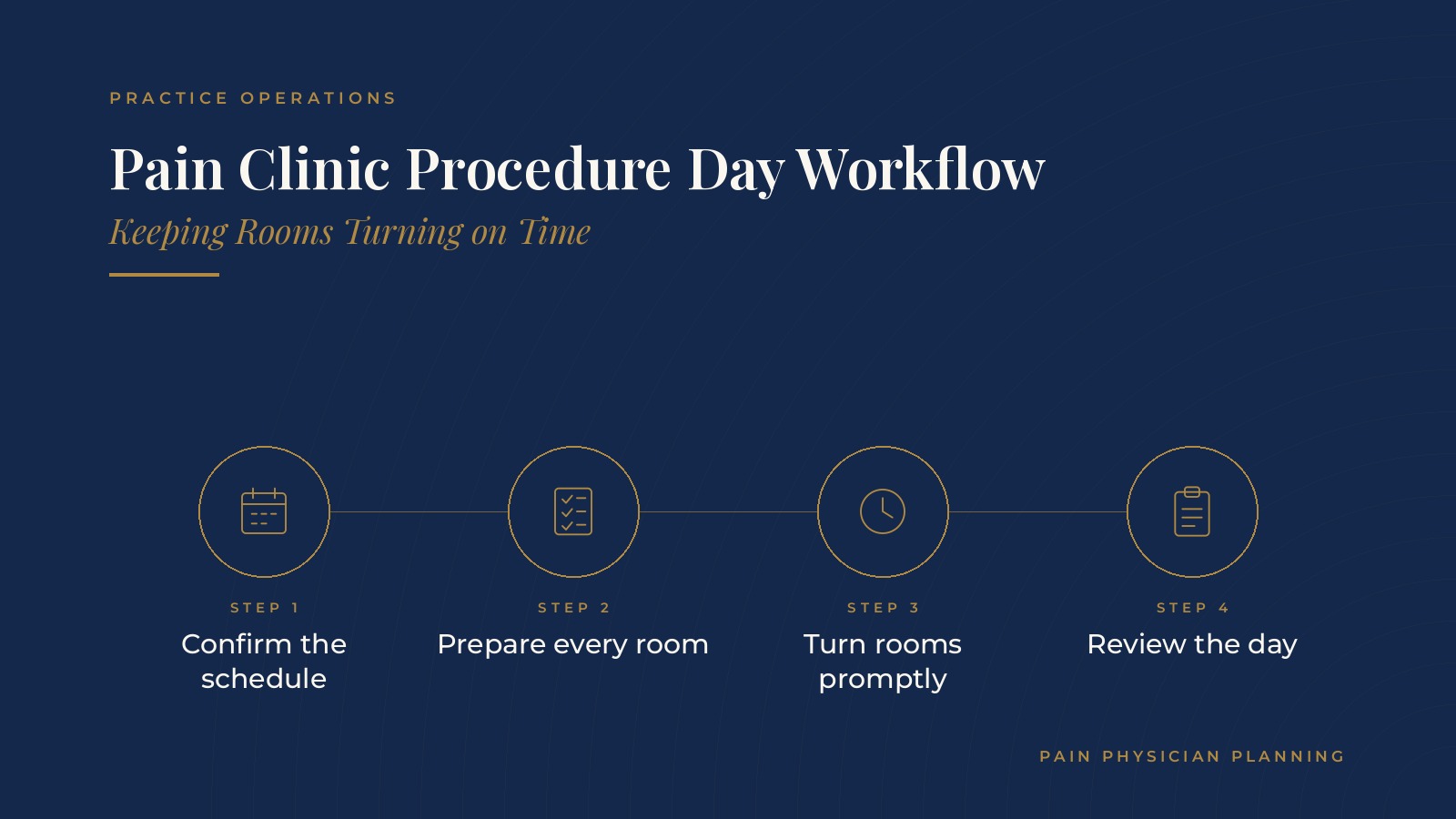
Pain Clinic Procedure Day Workflow | Keeping Rooms Turning on Time
A pain clinic procedure day workflow is the set of routines that carry a procedure day from the first arrival to the last patient leaving. It covers how the schedule is reviewed, how rooms are prepared and turned over, how staff hand patients from one area to the next and how the day is reviewed at the close. In short, a pain clinic procedure day workflow runs most smoothly when the schedule is checked the day before, arrival times are staggered, every room follows the same setup and turnover routine, each handoff has a named owner and the team spends a few minutes reviewing the day at the end. This resource from Pain Physician Planning explains the usual stages of a procedure day, the roles involved, how turnover is organized and the questions practices often bring to a practice operations professional.
Key takeaways
- Review the next day's schedule the afternoon before.
- Stagger arrival times to match room capacity.
- Use one setup and turnover routine for every room.
- Name an owner for each handoff.
- Close the day with a short review.
What a pain clinic procedure day workflow covers
The stages of the day
Most procedure days move through the same stages: schedule review, arrival and check-in, preparation, the procedure room, recovery, checkout and the end-of-day close. Writing those stages down gives every role a shared picture of the day.
How it differs from a clinic day
Clinic days center on exam rooms and visit lengths. Procedure days depend on rooms, equipment, supplies, nursing support and recovery space all being ready at the same moment, so small delays tend to spread.
Where it connects to scheduling
The workflow starts with how procedure blocks are built. The guide to the pain clinic scheduling template explains how many clinics set up procedure blocks, slot lengths and turnover time.
Preparing the day before
Review the next day's schedule
Many clinics review the next day's procedure list the afternoon before. The team checks that each visit is booked in the right block, that paperwork and orders are complete and that rooms and equipment are assigned.
Reminder calls and messages
Reminder calls or messages give patients their arrival time, the location and any instructions the physician's team has prepared for that visit. Staff follow the clinic's own approved wording for these reminders.
Stage supplies and rooms
Supply carts, trays and equipment for the first cases are often set out the evening before or first thing in the morning, so the first procedure can begin on time.
A morning huddle
A short morning staff huddle lets the team confirm the order of cases, any changes overnight and who covers each area.
Pain Physician Planning can introduce you to independent practice operations professionals who work with pain management practices on procedure day workflows, room turnover and staff routines. To request an introduction, contact us or call or text (972) 616-4581. You can also read about pain management practice operations.
Arrival, check-in and preparation
Staggered arrival times
Arrival times spaced to match the number of rooms and preparation areas keep the waiting room calm and prevent a crowd at the front desk at the start of the day.
A focused check-in
Check-in on procedure days is usually short and predictable: confirming identity and contact details, completing any remaining paperwork and letting the preparation area know the patient has arrived. The guide to the pain clinic front desk covers check-in routines in more detail.
The preparation area
Medical assistants or nurses bring each patient from the waiting room to preparation following the clinic's clinical protocols. A simple board or screen showing who is in preparation, who is in a room and who is in recovery helps everyone see the flow at a glance.
Room setup and turnover
One standard room setup
When every procedure room is set up the same way, with supplies in the same places, staff can move between rooms without slowing down. A short written checklist for each room type keeps the setup consistent.
A clear turnover routine
Turnover usually follows a fixed sequence: clearing the room, cleaning surfaces according to the clinic's protocols, restocking supplies and preparing the next setup. Writing that sequence as a short checklist helps new staff learn it quickly.
Assign turnover roles
Clinics often name who handles each part of turnover, so two people are not doing the same step while another step waits. Shared roles are clearer when they are listed on the daily assignment sheet.
Plan the room around the work
Room layout also shapes turnover. The guide to the pain clinic layout explains how procedure, preparation and recovery spaces are often arranged.
Recovery, checkout and the next visit
Recovery handoffs
Each patient moves from the procedure room to recovery with a handoff between named staff members, following the clinic's clinical routines. A consistent handoff keeps information from slipping between areas.
Checkout on procedure days
Before patients leave, the front desk or checkout staff confirm the next visit, provide the written materials the physician's team has prepared and answer scheduling questions.
Book the follow-up before departure
Many clinics book the follow-up visit before the patient leaves, so the next step is on the calendar and the patient does not need to call back later.
Roles and communication during the day
Who does what
A daily assignment sheet lists who covers the front desk, preparation, each procedure room, recovery and checkout. When everyone can see the sheet, questions about coverage get answered quickly.
One point of contact
Many clinics name a charge nurse or lead who watches the overall flow, adjusts room assignments when a case runs long and keeps the physicians informed about the next patient.
Short check-ins
Brief check-ins at midday and before the last block let the team adjust breaks, restocking and room use while there is still time to keep the afternoon on schedule.
Reviewing the day and questions to ask
A five-minute close
At the end of the day, a short review covers which cases started late and why, which supplies ran low and anything that slowed turnover. A few notes each week reveal patterns the team can fix.
Simple measures
Many clinics track first-case start times, average turnover time between cases and how often the day ends on time. These are reviewed as trends over several weeks rather than single days.
Planning questions
- How far ahead is the next day's procedure list reviewed?
- How are arrival times spaced across the morning and afternoon?
- Is there a written setup and turnover checklist for every room?
- Who watches the overall flow during the day?
- Which measures will the team review each month?
Frequently asked questions
What is a pain clinic procedure day workflow?
It is the set of routines that carry a procedure day from schedule review and arrival through preparation, the procedure room, recovery, checkout and the end-of-day review.
Why review the schedule the day before?
A review the afternoon before gives the team time to confirm bookings, complete paperwork and assign rooms and equipment before the first patient arrives.
How do clinics keep room turnover on time?
Many clinics use a standard room setup, a written turnover checklist and named turnover roles, so each step happens in the same order every time.
Who manages the flow during a procedure day?
Many clinics name a charge nurse or lead who watches the overall flow, adjusts room assignments and keeps the physicians informed about the next patient.
What do clinics measure on procedure days?
Common measures include first-case start times, average turnover time between cases and how often the day finishes on schedule, reviewed as trends over several weeks.
Request an introduction
Pain Physician Planning can introduce you to independent practice operations professionals who work with pain management practices on procedure day planning, patient flow and clinic operations. Learn more about pain management practice operations, then take the short Pain Physician Planning Business survey and request an introduction. You can also call or text (972) 616-4581, or contact us. The form goes to [email protected].