
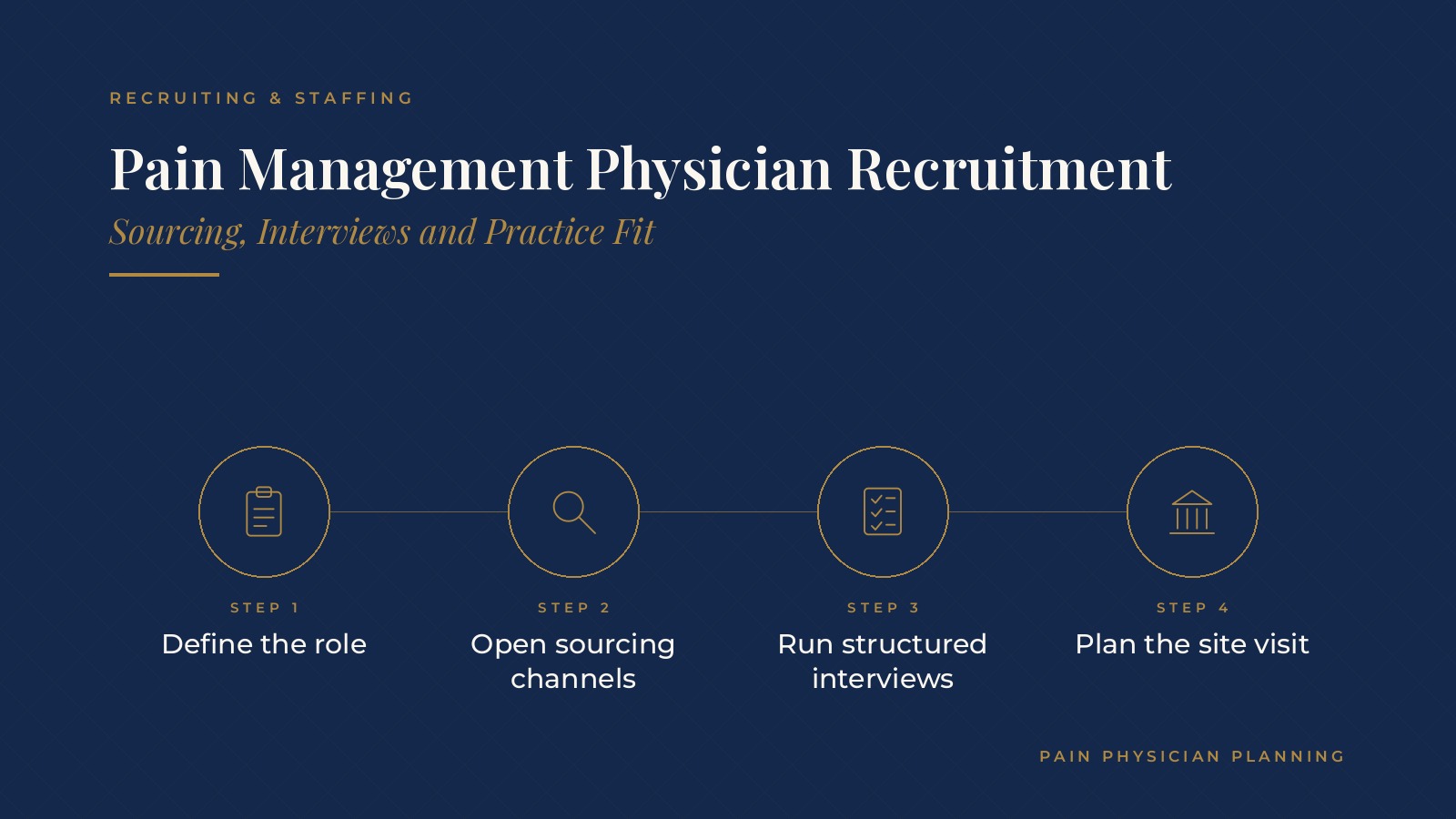
Pain Management Physician Recruitment | Sourcing, Interviews and Practice Fit
Pain management physician recruitment is the process a clinic follows to find, interview and welcome a new physician. It covers defining the role, choosing where to look, running interviews and site visits and judging whether a candidate fits the way the practice works. In short, pain management physician recruitment goes more smoothly when the clinic writes down the role first, uses more than one sourcing channel, runs the same interview steps for every candidate and plans the site visit carefully. A named owner keeps the process moving and keeps candidates informed. This resource from Pain Physician Planning walks through the common stages of physician recruiting, the questions practices ask themselves at each stage and how independent professionals often support the process.
Key takeaways
- Write down the role before sourcing begins.
- Use more than one sourcing channel.
- Run the same interview steps for every candidate.
- Plan site visits so candidates meet the team.
- Name one owner to keep the process moving.
Defining the role before pain management physician recruitment begins
Clinical focus
Start by listing the procedures, conditions and clinic settings the new physician will cover. A clear list helps candidates judge fit and keeps interviews focused on the work the practice actually needs.
Schedule and locations
Note the expected clinic days, procedure days and locations. Candidates often compare opportunities by schedule and travel, so a written outline answers early questions.
How the physician fits the team
Describe how the physician will work with advanced practice providers, nurses, medical assistants and the front desk. The guide to the pain clinic staff huddle shows how daily team routines are commonly organized.
Sourcing channels for pain physicians
Training program networks
Fellowship and residency networks are a common starting point. Many clinics keep in touch with program coordinators and attend program events to meet physicians nearing the end of training.
Professional recruiters
Some practices work with independent physician recruiters who maintain candidate networks and handle early screening. Clinics usually agree on the role outline and timeline before a search begins.
Professional networks and referrals
Colleagues, specialty meetings and professional societies often surface candidates who are not actively searching. A short, shareable role summary makes it easy for colleagues to pass the opportunity along.
The clinic website and job boards
A clear careers section on the clinic website and listings on physician job boards round out the plan, so candidates who search on their own can find the opening.
Pain Physician Planning can introduce you to independent practice operations professionals who work with pain management practices on recruiting plans, interview steps and onboarding workflows. To request an introduction, contact us or call or text (972) 616-4581. You can also read about pain management practice operations.
Screening and interview steps
An initial conversation
A short phone or video call confirms interest, availability and basic fit. Many clinics use the same short list of questions for every candidate so that early conversations are easy to compare.
Structured interviews
Structured interviews use the same core questions for each candidate, with time for open discussion. Interviewers often include a physician, the practice administrator and a clinical lead, each covering a different area.
Shared notes
Each interviewer records notes in the same format soon after the conversation. Comparing notes across interviewers gives a clearer picture than relying on memory a week later.
Planning the site visit
A clear agenda
A written agenda sent before the visit tells the candidate who they will meet, which spaces they will see and how long each part takes. It also helps the clinic team prepare.
Meeting the whole team
Time with physicians, advanced practice providers, nurses and front desk staff gives the candidate a realistic view of daily work. Staff often notice things about fit that formal interviews miss. The guide to the pain clinic front desk describes the front desk workflows a candidate will see during the visit, and a short stop there helps the candidate understand how patients move from check-in to the exam room.
Seeing the clinic in action
A tour of procedure rooms, exam rooms and the front desk during a normal clinic day shows how the practice runs. The guide to pain clinic KPIs covers measures many clinics already review, which can be part of an operations overview.
Questions about practice fit
Clinical approach
Practices often ask how the candidate likes to structure visits, how they work with referring physicians and which procedures they want to grow over time.
Team and communication
Questions about how the candidate works with nurses, medical assistants and front desk staff, and how they prefer to receive messages during the day, help predict daily fit.
Growth and interests
Understanding a candidate's longer-term interests, such as teaching, research or a new service line, helps both sides judge whether the opportunity matches their plans.
Keeping the process organized
One owner and one timeline
A named owner, usually the practice administrator, keeps the timeline, schedules interviews and sends updates. Candidates often weigh several opportunities at once, so steady communication matters.
A simple tracking sheet
A shared sheet listing each candidate, the source, the stage and the next step keeps everyone on the same page and shows which sourcing channels produce interviews.
Preparing for the first day
Once a physician accepts, the clinic can begin planning the first weeks: schedule templates, introductions to referring offices and time with each department. The guide to the pain clinic scheduling template covers how new schedules are often built. Agreement terms are handled separately by the practice and its own independent professionals.
Questions to ask a practice operations professional
Planning questions
- How should the role outline be written and who approves it?
- Which sourcing channels fit the clinic's location and timeline?
- What interview steps and shared note format will be used?
- How will site visits be scheduled around clinic days?
- What does the onboarding plan look like for the first month?
Keep records with the practice
Many clinics keep recruiting notes, role outlines and tracking sheets in the practice's own shared folders, so the process can be repeated for future openings.
Frequently asked questions
What is pain management physician recruitment?
It is the process a clinic follows to find, interview and welcome a new pain physician, including defining the role, sourcing candidates, interviews, site visits and onboarding.
Where do clinics find pain physician candidates?
Common channels include fellowship and residency networks, independent physician recruiters, professional networks and referrals, the clinic website and physician job boards.
What is a structured interview?
It is an interview that uses the same core questions for every candidate, so that answers can be compared fairly across interviewers and candidates.
What happens during a site visit?
Most site visits include meetings with physicians and staff, a tour of the clinic during a normal day and time to discuss the role, schedule and team.
Who usually manages the recruiting process?
Many clinics name the practice administrator as the owner, who keeps the timeline, schedules interviews and keeps candidates informed at each stage.
Request an introduction
Pain Physician Planning can introduce you to independent practice operations professionals who work with pain management practices on recruiting plans, interview steps and practice operations. Learn more about pain management practice operations, then take the short Pain Physician Planning Business survey and request an introduction. You can also call or text (972) 616-4581, or contact us. The form goes to [email protected].